Skip to content

Libraries

Enter a word or phrase to perform a general search across all records in the Library catalog. You can also browse records in the catalog without performing a search.

Search Tips
  • Searches are not case sensitive.
  • Searching for multiple words connects them with OR by default. Matching records can contain any of the words.
  • Connect multiple words with AND if you only want to see records containing both words.
  • Use quotation marks to search for a phrase.
  • Place an asterisk (*) at the end of a word as a wildcard.

10532 results found. Records searched: 10532

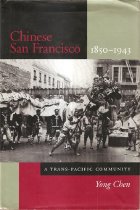
  1. Chinese San Francisco, 1850-1943 : A Trans-Pacific Community--Cover
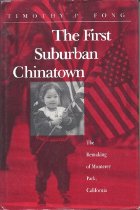
  2. 979.4-F - Monterey Park, California, is a community of 60,000 residents, located east of downtown Los Angeles. Dubbed by the media the "First Suburban Chinatown," Monterey Park is the only city in the continental United States with a majority Asian American population. Since the early 1970s, large numbers of Chinese immigrants moved there and transformed a quiet, predominantly white middle-class bedroom community into a bustling international boomtown. Timothy Fong examines the demographic, economic, social, and cultural changes taking place in Monterey Park, as well as the political reactions to change. Although the city was initially recognized for its liberal attitude toward newcomers, rapid economic development and population growth spawned numerous problems. Greater density, traffic congestion, less open space and parking, and strain on city services are problems that any city would encounter with rapid unplanned growth. The prominence of Chinese-language business signs, and ethnic restaurants, markets, and shops persuaded many older residents to focus blame on the immigrants. Fong describes how, by 1986, the once ethnically diverse city council became predominantly white and promoted such "anti-Chinese" measures as controlled growth and English as the official language. Unlike earlier waves of Asian immigrants, many of the Chinese who settled in Monterey Park were affluent and well educated. Resentment over their rapid material success was fueled by pervasive anti-Asian sentiment throughout the country. Fearing that newcomers were "taking over" and refusing to assimilate, residents supported a series of initiatives intended to strengthen "community control." These initiatives were branded as "racist" by development interests, as well as by many of the usually apolitical Chinese in the city. Fong chronicles the evolution of the conflict and locates the beginnings of its recovery from internal strife and unwanted negative media attention. He demonstrates how the parallel emergence of a populist growth control movement and a nativist anti-immigrant movement diverted attention from legitimate concerns over uncontrolled development in the city. Similar conflicts are occurring in other areas of California, as well as in New York City's Manhattan and Queens boroughs; Houston, Texas; and Orlando, Florida. Fong's detailed study of Monterey Park explores how race and ethnicity issues are used as political organizing tools and weapons.

    Book

    Record Type: Library

    The First Suburban Chinatown...Front Cover
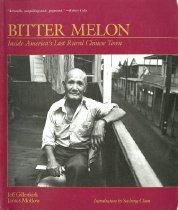
  3. Bitter Melon: Inside America's Last Rural Chinese Town. Cover
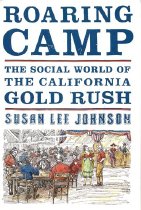
  4. Roaring Camp...Front Cover
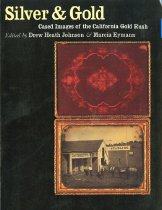
  5. Silver & Gold: Cased Images of the California Gold Rush-Cover
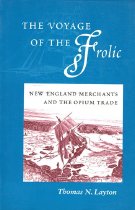
  6. Roaring Camp...Front Cover
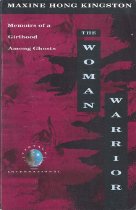
  7. The Woman Warrior, front cover
  8. The Woman Warrior, front cover
  9. The Woman Warrior...Front Cover
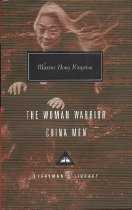
  10. The Woman Warrior, China Men Front Cover
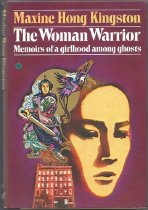
  11. The Woman Warrior: Memoirs of a girlhood among ghosts
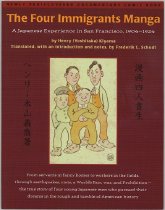
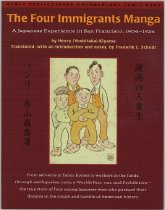
  12. The Four Immigrants Manga, front cover
  13. Gold Rush: A Literary Exploration-Cover
  14. The Four Immigrants Manga, front cover
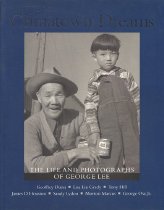
  15. Chinatown Dreams: The Life and Photographs of George Lee Front Cover
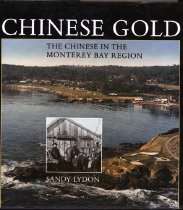
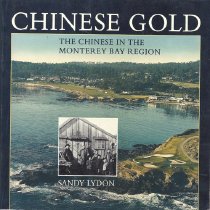
  16. Chinese gold : the Chinese in the Monterey Bay Region.Cover
  17. 979.4-L - No monuments, no prominent place names, no gilt "Chinese-style" buildings, and no large concentrations of Chinese people attest to the Chinese presence in the Moneterey Bay Region. In 1982 a local newspaper gave the following assessment of Asian immigration when reconstructing the arrival of immigrant groups into the Pajaro Valley: Original Spanish subjects [were] replaced by early American settlers of European background, followed by the arrival of the Croatians, who became a dominant economic factor, and the Portuguese, and now the Mexicans, with a sprinkling of Orientals down through the years. The Chinese, like the Japanese, Koreans, Filipinos, and Southeast Asians, have consistently been thought of as "sprinkled" throughout history, marginal participants who made no major contributions. Yet Chinese contributions were fundamental to the region's economic development. In Watsonville, known for its diverse agriculture, Chinese farm laborers provided the muscle and ingenuity which led to agricultural diversification in the Pajaro Valley. Until their arrival in the 1860s, wheat was the dominant crop. The sugar beet industry which led an agricultural revolution in both the Salinas and Pajaro Valleys wsa built on the backs of dependable Chinese workers. At the turn of the century the Chinese helped pioneer the fruit-drying industry which made the difference between profit and loss on the apple crop. In Salinas the Chinese reclaimed thousands of acres of Salinas Valley tule swamps and brought them into production as well as providing the labor for a diversification similar to that which transformed the Pajaro Valley. In Monterey, were Cannery Row is now a tourist attraction, the Chinese founded the commercial fishing industry and for a half-century inspired other fishermen in the area to expand the definition of marketable products to include squid, mussels, abalone, and seaweed. Santa Cruz became a resort town because Chinese made the cuts, drilled the tunnels, and laid the rails which brought trainloads of tourists into Santa Cruz and Monterey counties. In fact, most of the large development projects undertaken in the region in the nineteenth century, whether they were railroads, irrigation projects, or major water systems, relied on Chinese laborers.... Excerpt from Introduction

    Book

    Record Type: Library

    Chinese Gold: The Chinese in the Monterey Bay Region Front Cover
  18. 979.4-L - In the late summer of 1984, the author and a group of his archaeology students excavated fragments of Chinese porcelain at the site of a Pomo Indian village a hundred miles north of San Francisco. How did these ceramics, which were more than a hundred years old, find their way to this remote area? And what could one make of local legend that told of Pomo women wearing Chinese silk shawls in the 1850's? The author determined to find the answers to these questions, never dreaming that his quest would eventually involve the lives of nineteenth-century Boston merchants, Baltimore shipbuilders, Bombay opium brokers, and newly rich businessmen in gold rush San Francisco. The author soon learned that in 1850 the clipper Frolic, a sailing ship built specifically for the Asian opium trade, had wrecked on the Mendocino coast, a few miles from the Pomo village. He unearthed the business records of its owners, A. Heard & Co., which showed that respectable Bostonians had made their fortunes running opium from India to China. The family histories of the firm's two most influential partners are traced from the American Revolution to their joint decision to order a custom-built Baltimore clipper for the opium trade. In describing the design, construction, and outfitting of the Frolic, the author was aided by a stroke of luck—a slave named Fred Bailey, later known to the world as the abolitionist Frederick Douglass, worked in the Frolic's shipyard in 1836 and wrote detailed descriptions of the building of such ships. The Frolic, under Captain Edward Faucon (who was depicted as the "good" captain in Richard Henry Dana's Two Years Before the Mast) plied the opium trade from Bombay to China from 1845 to 1850. The author describes the political, financial, and logistical aspects of the profitable enterprise before 1849, when the introduction of steam vessels into the opium trade made the Frolic obsolete as an opium clipper. However, the California gold rush created a lucrative market for Chinese goods, and the Heard firm dispatched the Frolic to San Francisco with a diverse cargo that included silks, porcelain, jewelry, and furniture. When the Frolic wrecked on the Mendocino coast, the Pomo Indians salvaged its cargo, and the vessel's history passed into folk tradition. The subsequent lives of those intimately associated with the Frolic are profiled. The owners' families preferred to forget the source of their fortunes, and prior to her death in 1942, the daughter of the Frolic's captain burned her father's papers to preserve his reputation. She could not know that in 1965 sports divers would discover the remains of her father's opium clipper, and that 134 years after its wreck, the Frolic's story would inspire an archaeologist-anthropologist to pursue its colorful history.

    Book

    Record Type: Library

    The Voyage of the Frolic...Front Cover
  19. San Francisco's Telegraph Hill-Cover
  20. Pigtails and gold dust - Cover

Thank You!

Confirmation Message Here....