Library Record
Images

Metadata
Call# |
979.4-L |
Summary |
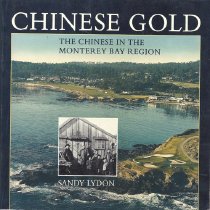
No monuments, no prominent place names, no gilt "Chinese-style" buildings, and no large concentrations of Chinese people attest to the Chinese presence in the Moneterey Bay Region. In 1982 a local newspaper gave the following assessment of Asian immigration when reconstructing the arrival of immigrant groups into the Pajaro Valley: Original Spanish subjects [were] replaced by early American settlers of European background, followed by the arrival of the Croatians, who became a dominant economic factor, and the Portuguese, and now the Mexicans, with a sprinkling of Orientals down through the years. The Chinese, like the Japanese, Koreans, Filipinos, and Southeast Asians, have consistently been thought of as "sprinkled" throughout history, marginal participants who made no major contributions. Yet Chinese contributions were fundamental to the region's economic development. In Watsonville, known for its diverse agriculture, Chinese farm laborers provided the muscle and ingenuity which led to agricultural diversification in the Pajaro Valley. Until their arrival in the 1860s, wheat was the dominant crop. The sugar beet industry which led an agricultural revolution in both the Salinas and Pajaro Valleys wsa built on the backs of dependable Chinese workers. At the turn of the century the Chinese helped pioneer the fruit-drying industry which made the difference between profit and loss on the apple crop. In Salinas the Chinese reclaimed thousands of acres of Salinas Valley tule swamps and brought them into production as well as providing the labor for a diversification similar to that which transformed the Pajaro Valley. In Monterey, were Cannery Row is now a tourist attraction, the Chinese founded the commercial fishing industry and for a half-century inspired other fishermen in the area to expand the definition of marketable products to include squid, mussels, abalone, and seaweed. Santa Cruz became a resort town because Chinese made the cuts, drilled the tunnels, and laid the rails which brought trainloads of tourists into Santa Cruz and Monterey counties. In fact, most of the large development projects undertaken in the region in the nineteenth century, whether they were railroads, irrigation projects, or major water systems, relied on Chinese laborers.... Excerpt from Introduction |
Object Name |
Book |
Author |
Lydon, Sandy |
Subjects |
Chinese Americans--Monterey Bay Region (Calif.) -- History. Monterey Bay Region (Calif.)--Ethnic relations--History. |
Title |
Chinese Gold: The Chinese in the Monterey Bay Region |
Published Date |
1985 |
Physical Description |
xv, 550 p. : ill. ; 22 cm. |
Catalog Number |
2014.007.026 |
Accession number |
2014.007 |
Publisher |
Capitola Book Company |
Collection |
Public Affairs Television |
Year Range from |
1985 |
Year Range to |
1985 |