Skip to content

Libraries

Enter a word or phrase to perform a general search across all records in the Library catalog. You can also browse records in the catalog without performing a search.

Search Tips
  • Searches are not case sensitive.
  • Searching for multiple words connects them with OR by default. Matching records can contain any of the words.
  • Connect multiple words with AND if you only want to see records containing both words.
  • Use quotation marks to search for a phrase.
  • Place an asterisk (*) at the end of a word as a wildcard.

10532 results found. Records searched: 10532
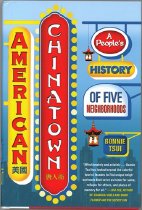
  1. American Chinatown, front cover
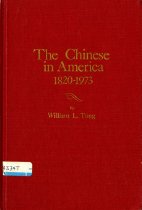
  2. The Chinese in America, 1820-1973 : a chronology & fact book.
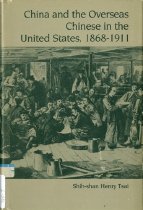
  3. China and the overseas Chinese in the United States, 1868-1911
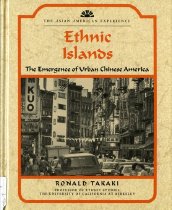
  4. Ethnic islands : the emergence of urban Chinese America
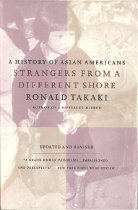
  5. Strangers From A Different Shore. Cover
  6. American Chinatown, front cover
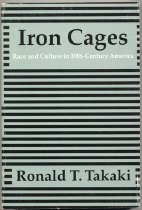
  7. Iron cages : race and culture in nineteenth-century America
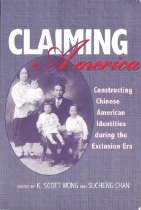
  8. The Chinese in America, 1820-1973 : a chronology & fact book. Cover
  9. China and the Overseas Chinese in the United States, 1868-1911-Cover
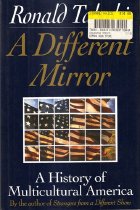
  10. A Different Mirror : A History of Multicultural America-Cover
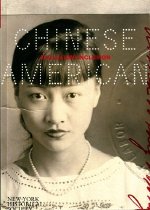
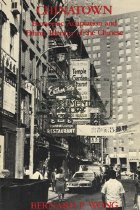
  11. Chinese American: Exclusion/Inclusion-Cover
  12. Iron Cages: Race and Culture in 19th-Century America, front cover
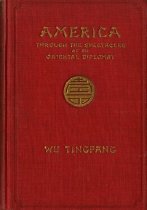
  13. America Image 1
  14. Coming to America: The Chinese-American Experience Front Cover
  15. Underfoot : an everyday guide to exploring the American past
  16. Coming to America: The Chinese-American Experience
  17. 973-W - This collection of essays centers on the formation of an ethnic identity among Chinese Americans during the period when immigration was halted. The first section emphasizes the attempts by immigrant Chinese to assert their intention of becoming Americans and to defend the few rights they had as resident aliens. Highlighting such individuals as Yung Wing, an ardent advocate of American social and political ideals, and Wong Chin Foo, one of the first activists for Chinese citizenship and voting rights, these essays speak eloquently about the early struggles in the Americanization movement. The second section shows how children of the immigrants developed a sense of themselves as having a distinct identity as Chinese Americans. For this generation, many of the opportunities available to other immigrants' children were simply inaccessible. In some districts explicit policies kept Chinese children in segregated schools; in many workplaces discriminatory practices kept them from being hired or from advancing beyond the lowest positions. In the 1930s, in fact, some Chinese Americans felt their only option was to emigrate to China, where they could find jobs better matched to their abilities. Many young Chinese women who were eager to take advantage of the educational and work options opening to women in the wider U.S. society had to overcome first their family's opposition and then racism. As the personal testimonies and historical biographies eloquently attest, these young people deeply felt the contradictions between Chinese and American ways; but they also saw themselves as having to balance the demands of the two cultures rather than as having to choose between them.

    Book

    Record Type: Library

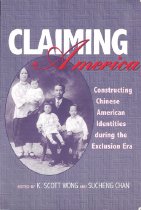
    Claiming America...Front Cover
  18. 973-W - This collection of essays centers on the formation of an ethnic identity among Chinese Americans during the period when immigration was halted. The first section emphasizes the attempts by immigrant Chinese to assert their intention of becoming Americans and to defend the few rights they had as resident aliens. Highlighting such individuals as Yung Wing, an ardent advocate of American social and political ideals, and Wong Chin Foo, one of the first activists for Chinese citizenship and voting rights, these essays speak eloquently about the early struggles in the Americanization movement. The second section shows how children of the immigrants developed a sense of themselves as having a distinct identity as Chinese Americans. For this generation, many of the opportunities available to other immigrants' children were simply inaccessible. In some districts explicit policies kept Chinese children in segregated schools; in many workplaces discriminatory practices kept them from being hired or from advancing beyond the lowest positions. In the 1930s, in fact, some Chinese Americans felt their only option was to emigrate to China, where they could find jobs better matched to their abilities. Many young Chinese women who were eager to take advantage of the educational and work options opening to women in the wider U.S. society had to overcome first their family's opposition and then racism. As the personal testimonies and historical biographies eloquently attest, these young people deeply felt the contradictions between Chinese and American ways; but they also saw themselves as having to balance the demands of the two cultures rather than as having to choose between them.

    Book

    Record Type: Library

    Claiming America: Constructing Chinese American Identities during Exclusion
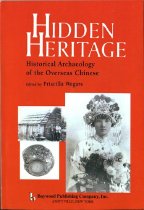
  19. Hidden heritage : historical archaeology of the overseas Chinese
  20. 973-W - The Chinese in the United States, like other nonAnglo-European minorities in this country, have experienced blatant prejudice and serious harassment. When they were no longer needed to build the western railroads in the 1870's, the Chinese were subject to flagrant attacks on their homes and business establishments as well as on their persons. They have been subject to persistent legal harassment in the form of exclusionary legislation, starting with the Exclusion Act of 1882 in California. In the 1930's, when the Chinese hand laundry business became too successful in New York, they were subject to state's legislation requiring licenses fees and posting of bonds that forces many of the smaller establishments into bankruptcy. Legal harassment continued into the 1970's, including law that prevented Chinese Americans from working in government positions. This active prejudice and harassment has resulted in the tightening of internal bonds within the minority group and the development of protective associations of one kind or another. The internal cohesiveness thus developed became the distinguishing characteristic of the Chinese American communities in cities like San Francisco and New York. Dr. Wong explains these "Chinatown" case in this book. This case study analyzes the structural adaptations that Chinese American communities in general, and the New York Chinatown in particular, have made to survive in American society. Dr. Wong's study has a wide applicability to the relationships among the ethnic components and between the ethnic components and the whole of our society.

    Book

    Record Type: Library

    Chinatown, Economic Adaptation and Ethnic Identity of the Chinese, cover

Thank You!

Confirmation Message Here....